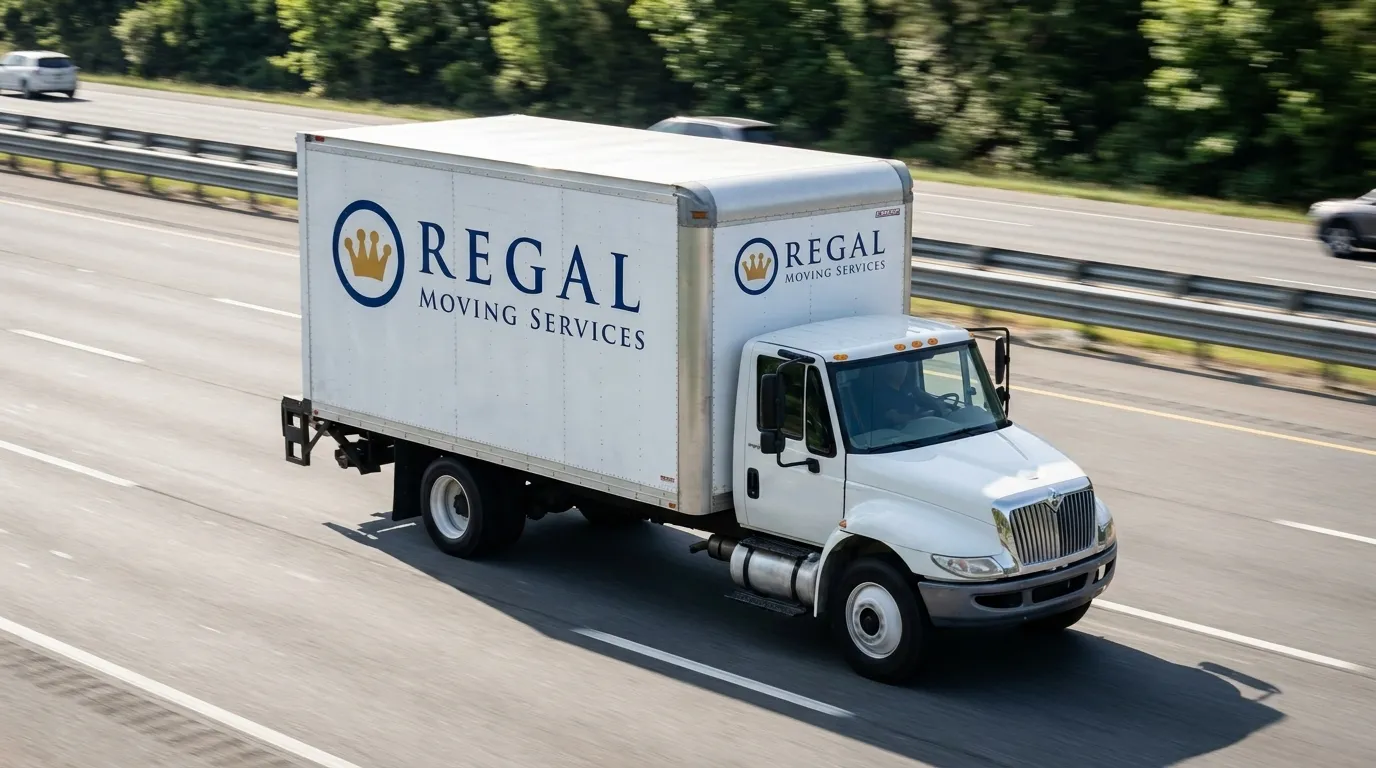
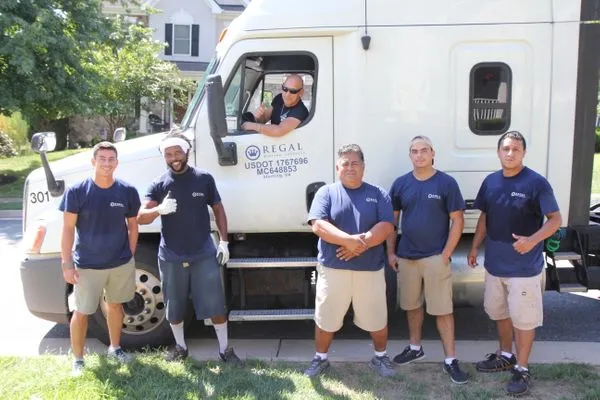
Regal Moving Services provides interstate moving for households and businesses moving from one state to another. We are registered with the U.S. Department of Transportation under US DOT 1767696 and MC648853, the federal authority required to move household goods across state lines. We’re a family-owned mover with our own movers and trucks, not a broker, and one move coordinator stays with you from the estimate to delivery.
A move to a new state comes with more paperwork and more questions than a local move. Our owner learned from his father to listen first and communicate when something changes. On an interstate move, that means explaining your estimate, your paperwork, and your options in plain language before you sign anything.
Mover or Broker? Know Who Is Moving You
Federal rules separate movers from brokers. A household goods broker arranges your move but does not haul it. A mover provides the trucks and the people who load and transport your belongings. Regal Moving Services is a mover, so the company that gives you the estimate is the company that shows up on move day.
What Makes a Move Interstate
When your belongings cross a state line, the Federal Motor Carrier Safety Administration (FMCSA) generally regulates the move. That changes what your mover has to give you and how your charges work.
FMCSA requires interstate movers to give you a written estimate for every shipment. A verbal quote is not an official estimate. The written estimate must list all charges, be dated, and be signed by you and the mover. Federal rules also require movers to base the estimate on a survey of your household goods, which is why we schedule an in-home consultation for interstate moves.
There are two kinds of estimates. A binding estimate guarantees the total cost based on the quantities and services listed. A non-binding estimate is the mover’s cost projection, and final charges depend on the actual weight and services. Under a non-binding estimate, a mover cannot require you to pay more than 110 percent of the estimate at delivery. Any remaining balance is billed afterward. Ask your move consultant which type applies to your move, and what would change the price.
Liability Coverage on an Interstate Move
Every interstate estimate must explain two liability options. Full Value Protection is the coverage you receive unless you waive it in writing, and it means the mover will repair, replace, or settle for damaged or lost items. The alternative, Released Value, limits the mover’s liability to 60 cents per pound per article. Your move coordinator will walk you through both options so you can choose the one that fits your belongings.
Paperwork You'll Receive
Before your interstate move, you’ll receive the FMCSA booklet “Your Rights and Responsibilities When You Move,” along with your written estimate and order for service. On move day, you’ll sign a bill of lading, which is your contract with the mover. Read each document before you sign, and never sign a blank or incomplete form.
If you have questions about any document, call your move coordinator. We would rather answer a question before move day than fix a misunderstanding after it.
Interstate Moving FAQs
1.
How do I check whether a mover is licensed for interstate moves?
Look up the mover’s US DOT or MC number on the FMCSA website. Regal Moving Services operates under US DOT 1767696 and MC648853.
2.
What is the difference between a binding and non-binding estimate?
A binding estimate guarantees the total cost for the listed services. A non-binding estimate can change with the actual weight, but at delivery you can’t be required to pay more than 110 percent of it.
3.
Do I need an in-home consultation for an interstate move?
Federal rules require an estimate based on a survey of your household goods, so we schedule an in-home consultation.
4.
What does Full Value Protection mean?
It means the mover is liable to repair, replace, or settle for items lost or damaged in the move. It applies unless you waive it in writing.
5.
What happens to my belongings during the drive?
Our long-distance movers pack, load, and deliver your shipment, with in-transit storage if needed. See our long-distance moving page for how we pack and protect a long haul.
6.
Can I use storage during an interstate move?
u003cspan style=u0022font-weight: 400;u0022u003eYes. Storage in transit holds your shipment until your new home is ready. See our u003c/spanu003eu003ca href=u0022/services/interstate-moving/u0022u003eu003cspan style=u0022font-weight: 400;u0022u003einterstate movingu003c/spanu003eu003c/au003eu003cspan style=u0022font-weight: 400;u0022u003e page for more on moving across state lines.u003c/spanu003e
How an Interstate Move Works
1. Schedule Your Consultation
Call or fill out the form, and a move coordinator will schedule a survey of your home.
2. Review Your Written Estimate
Your consultant explains the estimate type, your liability options, and every charge in writing.
3. Pickup and Delivery
Our movers load your home, transport it across state lines, and deliver it to your new address.
Get a Free Interstate Moving Estimate
Call (703) 782-9030 or request a free estimate online. We'll explain your move in plain language before you sign.
I used Regal for 2 moves and recently used a different company that was closer to my starting point. I wish I had called Regal for this move, I didn’t realize how good Regal is before having a point of comparison. Professional, focused, and careful. Hoping not to move again anytime soon, but will call Regal if I do.
Misty Aycock
June 17, 2026
Had a great experience with Regal moving services. Very professional. And would definitely use again!
Shane Brooks
June 1, 2026
I'm EXTREMELY Satisfied With The Level Of Professionalism From The Team*****The Accuracy & The Timing For My Move. I Would Most Definitely Refer Anyone Seeking Out A Proficient Moving Company & I'll Contact Regal For Any Moving Needs
Melanie Marts
May 29, 2026
My packing people were wonderful. We have some heavy furniture, and they wrapped and protected it really well. We also have a lot of fragile items, and they were carefully packed, and the boxes were properly marked. Ten hours of work!
Shane Brooks
May 29, 2026
I'm EXTREMELY Satisfied With The Level Of Professionalism From The Team*****The Accuracy & The Timing For My Move. I Would Most Definitely Refer Anyone Seeking Out A Proficient Moving Company & I'll Contact Regal For Any Moving Needs.
Linda Cass
May 12, 2026
6 guys showed up right on time, got started right away. They paid special attention making sure everything was wrapped and protected. They worked tirelessly getting everything into the next house, working for over 9 hours, always having a positive attitude. They were all wonderful! I would definitely recommend them for a move!
Scott Gilson Showcase Coordinator HHSBPA
May 9, 2026
Move was AWESOME!
Same crew delivered as did the pickup.
Covered all the carpets in the sale house at move out/pick and at the new apartment delivery.
My adult daughter was there for the delivery and felt very comfortable with the crew.
Everything was well wrapped, reassembled and no damage to anything.
Overall a GREAT EXPERIENCE!!
Kellie Hundemer
April 22, 2026
Great moving company! Very professional and they took very good care of our stuff. Highly recommend.
Rosie Robinson
April 8, 2026
Maria and her team were awesome professionals and their customer service was exceptional. Flexible hard working team that represented your company well! Recommend Regal to anyone looking for moving services dedicated to making your moving experience hassle free.
Alonzo Fulgham
March 20, 2026
After doing my research I found my experience to be professional and extremely accommodating . The white glove treatment begin immediately even though it was a small move in comparison to some of their larger moves . The estimate was very reasonable and the follow-up and execution was second to none . Because of my recent experience with Regal , I have decide to cancel my planned POD move next winter to Florida to work with this team again . They were that impressive !